About the Temple
Learn about our sacred heritage
About the Temple
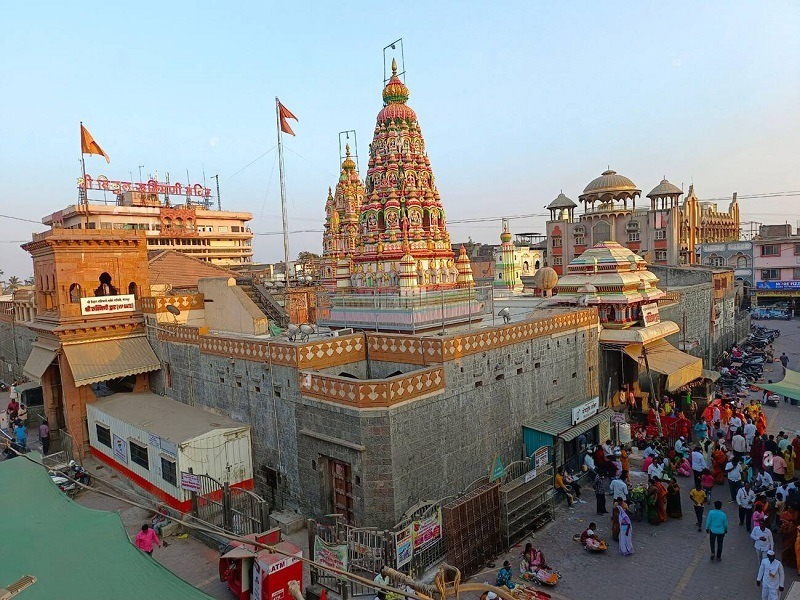
The Shri Vitthal Rukmini Mandir, on the sacred banks of the Chandrabhaga River, is a beacon of devotion in Pandharpur, Maharashtra. Dedicated to Lord Vitthal (a form of Lord Vishnu) and Goddess Rukmini, it is the most important pilgrimage for the Warkari tradition.
Millions of pilgrims visit during Ashadhi and Kartiki Ekadashi. The idol of Lord Vitthal standing on a brick recalls His wait for devotee Pundalik—symbolizing compassion and accessibility to all.
The complex blends traditional architecture, carved pillars, and serene courtyards—a living center for worship, culture, and service.
Shri Vitthal Rukmini Temple, Pandharpur
Pandharpur Vitthal Rukmini Temple - Shri Vitthal Rukmini temple, Pandharpur near Solapur is the main center of worship for the Hindu deity Vitthal, believed to be a local form of god Krishna or Vishnu and his consort Rakhumai or Rukmini. Shri Vitthal Rukmini temple is the main centre of worship for Vithoba, a form of the god Vishnu. A dip in the holy river Chandrabhaga on whose banks Pandharpur resides, is believed to have power to wash all sins. Prettily placed on the majestic banks of River Chandrabhaga, Pundalik Temple portrays lord Vitthal as its chief deity. Vitthal is one among the manifestations of Lord Vishnu. The main shrine is a five-story building with a pyramidal gun spire. The statue of Jaya and Vijaya flanks Lord Vithal.
The main attraction in this square shaped temple is its portico, which has a measurement of 25' by 17'. This portico holds the idol of lord Shiva, which is protected by a brass cover. It is a customary practice that the devotees should wash their feet in the warm water spring that flows adjacent to the temple before they embark their dharshan of the lord. One among the embarrassing allure in the temple premises is the iron boat of 3 ft by 2 ft, which floats in the river water but appears too heavy to raise with hands. Timings in the temple is schedules between 4 AM - 7 PM.
Rukmini Mandir
Rukmini Mandir in the district of Solapur is one of the chief deities of Pandharpur. This temple dedicated to her is placed on the banks of Chandra Bhaga river and it is commonly called as the Panduranga Temple. Lofty walls and colossal towers are the landmark signs of this lovely shrine. Situated on a high platform the temple stands 370 feet east-west houses and 170 feet northwest. The entry to the temple is through the Namdev gate which is characterized by a plight of 12 steps. The temple holds the statue of Namdev who is figured with his tambourine. Though Rukmini is the wife of Lord Krishna she is not seen with her husband in this shrine. Legend has it that Rukmini is doing her penance and that's why she is depicted alone in her temple. Earlier the mandir has only a small shrine and portico and later a mandap, an antarala and a sabhamandap were added to the existing structures.
Vishnupada
The Vishnupada literally is the lord's feet and the temple by this name situates within the city limits. Constructed with stone masonry, the temple is in the shape of an open hall where sixteen pillars of stone support its flat roof. The temple enshrines the lotus feet of the lord on rock, which are placed on a square. These rocks carries the footprints in two positions and one can also see the foot prints of a cow entrenched in it. Since the temple situates in the middle of the river the water level can reach up to its floor level and in the rainy months the temple is virtually submerges with the water.
Legend of Vitthal Temple
The 'Vi' in Lord Vithoba's name denotes knowledge and 'Thoba' denotes shape. He is the shape of knowledge or the idol of knowledge. Another interpretation is that the word 'Vitthala' is said to be derived from the Marathi word 'Vit', meaning brick. 'Ba' is used to denote 'father' in Marathi. Lord Vithal / Vitthal / Vithoba is none other than Lord Vishnu, Lord Narayana or Lord Krishna. He is lovingly called names like Pandrinath, Panduranga, Pandhairiraya, Vithai, Vithoba, Vithu-mauli, Vitthalgururao by his devotees.
According to the legend, there was once a devoted son called Pundalik. Seeing Pundalik's sincere devotion towards his parents, Lord Vishnu was extremely pleased and reached Pundalik's house. Pundalik gave the Lord a brick to stand on and asked Him to wait until his duty was completed. The ever-loving Lord waited, and granted Pundalik the boon that He should remain on earth and bless all His devotees. The Lord remained behind and is known as Vithoba, the Lord who stands on a brick. This form of the Lord is Swayambhu and He is accompanied by His consort Rakhumai or Rukmini.
Daily Rituals and Vibrant Festivities
Pandharpur Temple follows a deeply spiritual daily schedule, ensuring uninterrupted devotion from dawn to midnight. The day begins before sunrise with Kakada Aarti, followed by Abhishekam, and continues with poojas, bhajans, and darshans. The evening Dhoop Aarti lights up the sanctum, and the final ritual, Shejarati, is performed before closing. Pandharpur comes alive during Ashadhi Ekadashi (June-July) and Kartiki Ekadashi (October-November).
Best Time to Visit
Pandharpur welcomes devotees year-round, with the most vibrant atmosphere during Ashadhi Ekadashi and Kartiki Ekadashi. For a quieter experience, the winter months from November to February are ideal for peaceful darshan and exploration along the Chandrabhaga River.
How to Reach Pandharpur
Pandharpur is well-connected by road, rail, and air. Regular MSRTC buses operate from Mumbai, Pune, Solapur, and Kolhapur. Pandharpur Railway Station connects to Mumbai, Pune, and Solapur, while Solapur Junction (about 75 km away) is a major hub. The nearest airport is Pune International Airport (about 210 km away), from where you can hire a taxi or take a bus to reach Pandharpur.
A Journey of Faith and Devotion
Pandharpur is an embodiment of unwavering faith, devotion, and Maharashtra’s cultural heritage. Whether you visit during the festivals or in the calm winter months, the town offers a spiritual journey that connects you with the divine and leaves you with inner peace and devotion.
Temple History
Ancient Origins
The temple's origins trace back to ancient times, with references found in various Puranas and historical texts. The sacred site has been a center of devotion for over a millennium.
Warkari Tradition
The temple is the heart of the Warkari tradition, where saints like Sant Dnyaneshwar, Sant Tukaram, and Sant Namdev have walked and spread the message of devotion.